Choosing your first aquarium setup or upgrading from a basic tank often comes down to one key decision: AIO aquarium vs starter kit. Both options are popular, both can keep fish healthy, and both serve different types of hobbyists. The right choice depends on your budget, your goals, and how serious you are about long term fish keeping.
An AIO aquarium is often seen as a cleaner, more integrated system, while an Aquarium Starter Kit is typically marketed as a simple, affordable way to begin. Before spending your money, it helps to understand how they differ in design, performance, flexibility, and long term value.
Let’s break it down clearly so you can choose the setup that fits you best.
What Is a Starter Kit Aquarium?
A starter kit aquarium is a pre-packaged setup designed to give beginners the basic equipment needed to start keeping fish. Instead of buying each component separately, the tank, filter, and light are bundled together in one box.
Most starter kits typically include:
- A standard glass aquarium
- A hang on back filter
- Basic LED lighting
- A lid or hood
- Sometimes a heater, depending on the size
The main appeal of a starter kit is convenience and affordability. Everything is included, and setup is usually straightforward. You place the tank, install the filter and light, fill it with water, and begin the cycling process.
Starter kits are often recommended for first time hobbyists because they reduce decision fatigue. You do not need to research individual equipment pieces right away. However, the included components are usually entry level, which means some hobbyists choose to upgrade parts later as they gain experience.
This makes a starter kit a practical entry point, especially for those who want to test the hobby before investing in a more advanced system.
What Is an AIO Aquarium?
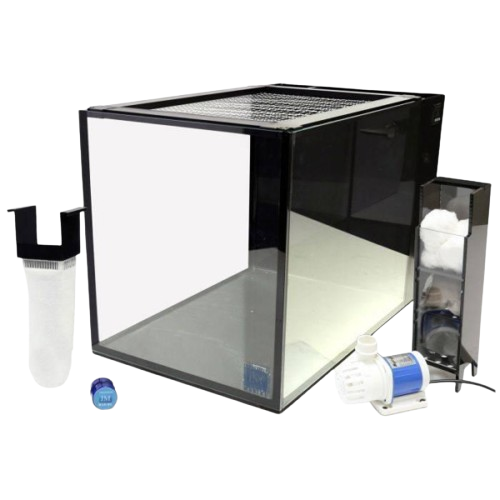
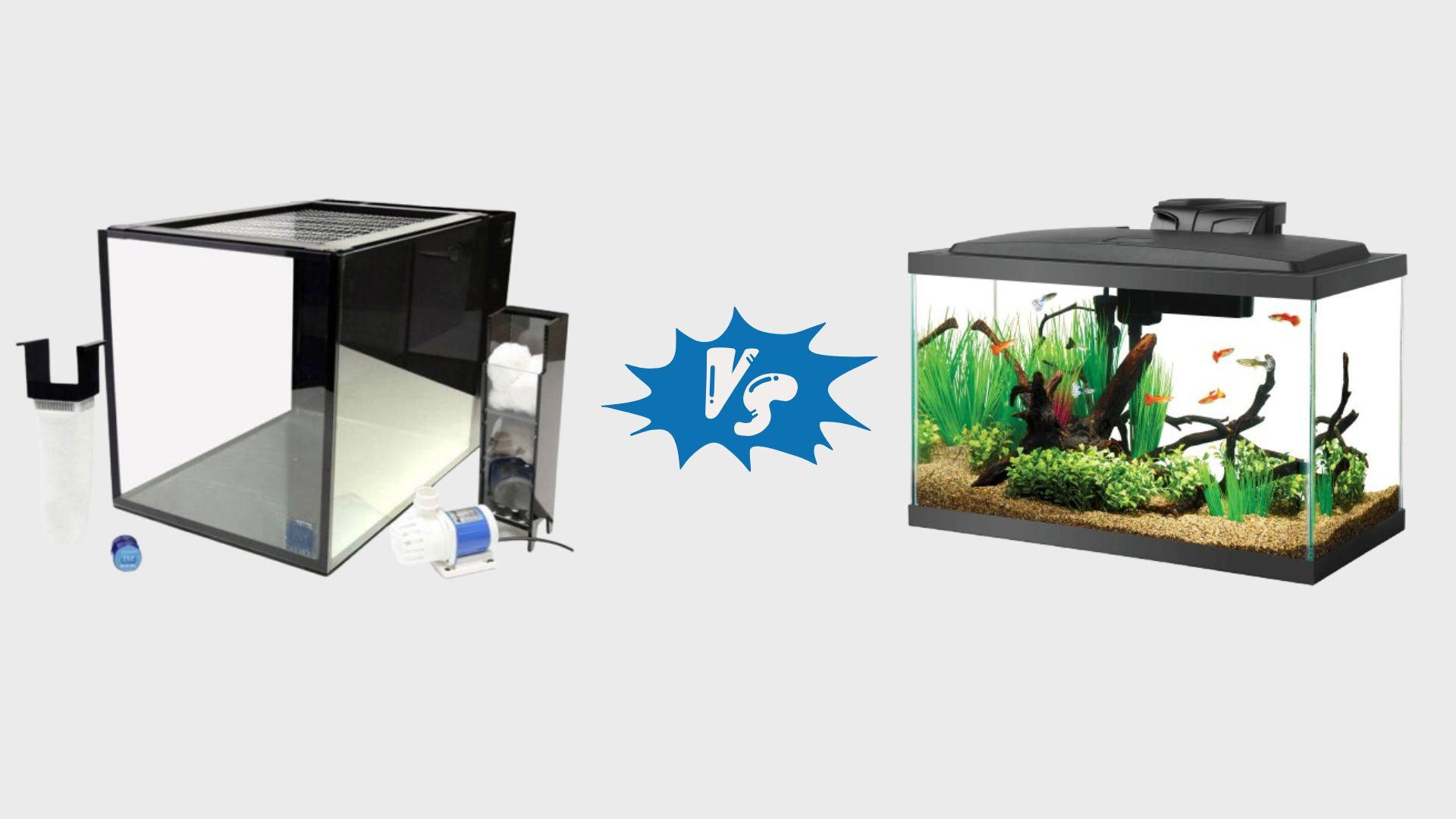
An AIO aquarium, short for All In One aquarium, is a tank with built-in filtration integrated directly into the system. Instead of attaching a hang-on back filter or external equipment, the filtration components are housed inside a rear or side chamber that is part of the tank’s design.
This structure keeps equipment organized and out of sight, creating a cleaner display while still maintaining proper water circulation and filtration.
If you would like a more detailed breakdown of how an AIO aquarium works, including its pros, cons, and long term value, read our full guide on What Is an AIO Aquarium and Is It Worth It.
AIO Aquarium vs Starter Kit: Key Differences
When comparing AIO aquarium vs starter kit, the differences extend far beyond the price tag. The design philosophy, filtration structure, flexibility, and long term ownership experience are noticeably different. Understanding these distinctions will help you choose the system that aligns with your expectations.
1. Design and Appearance
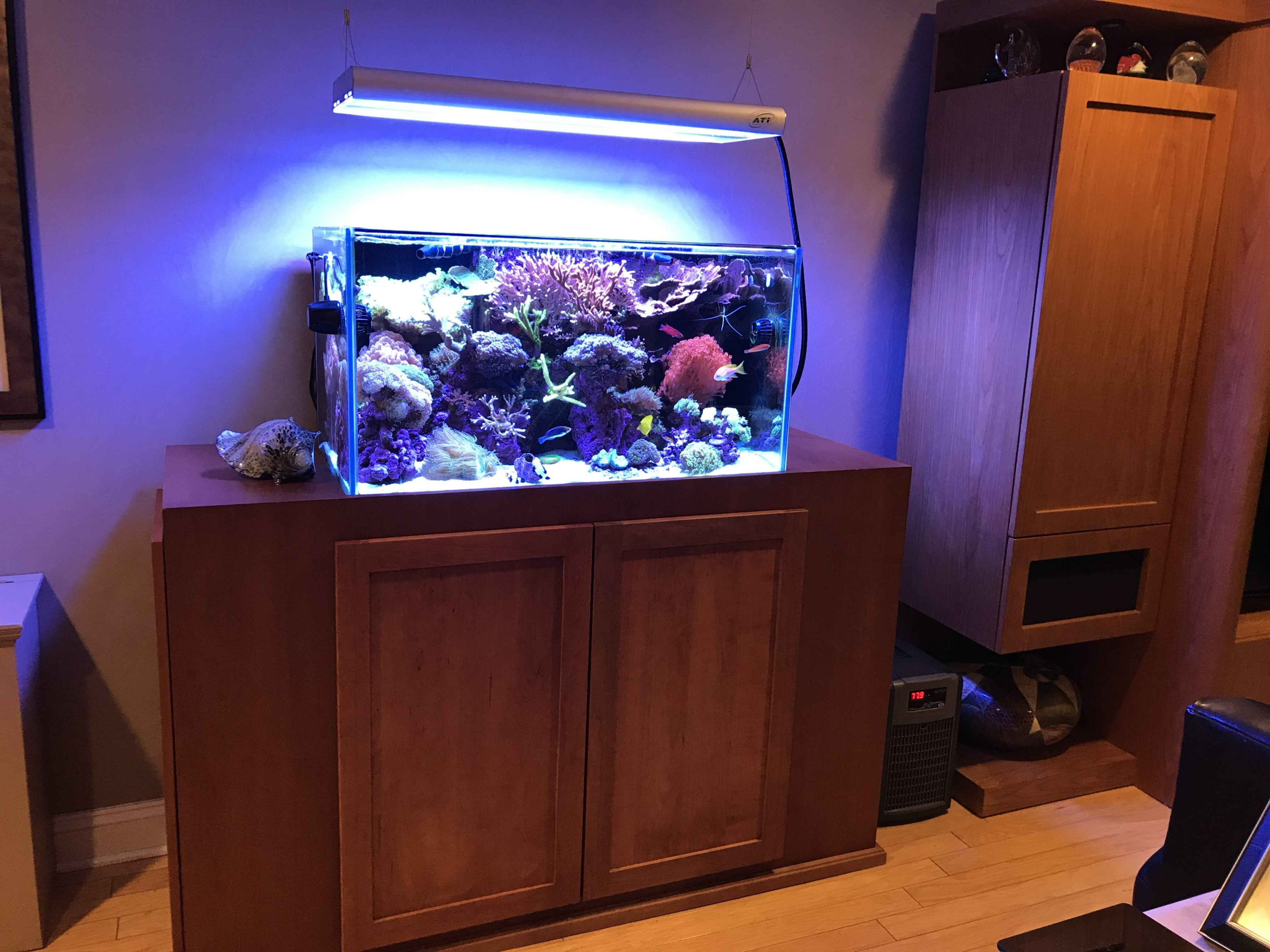
An AIO aquarium is built with presentation in mind. Because the filtration system is integrated into the tank, there are no visible hang on back filters, intake tubes, or bulky attachments disrupting the display. The result is a cleaner, more polished look where the focus stays on the fish and aquascape.
A starter kit, on the other hand, typically includes external equipment mounted on the back of the tank. While fully functional, it does not offer the same streamlined appearance. For hobbyists placing their aquarium in a living room, office, or shared space, this visual difference can be significant.
If aesthetics matter to you, an AIO aquarium generally has the advantage.
2. Filtration Structure and Performance
Filtration is one of the most important factors in the AIO aquarium vs starter kit decision.
An AIO aquarium uses an internal chamber where water moves through multiple stages in a controlled path. This setup allows for organized media placement and often provides more room for customization. Because the system is built into the tank, water flow feels more structured and intentional.
Starter kits rely on a hang on back filter. These filters are effective for basic setups, but they are typically smaller and may have limited space for additional filtration media. For lightly stocked tanks, this works well. For hobbyists looking to fine tune water quality, the internal chamber of an AIO aquarium often offers more flexibility.
3. Setup and Ease of Use
Starter kits are designed for simplicity. You place the tank, install the included filter and light, fill it with water, and begin cycling. The process is straightforward and beginner friendly.
An AIO aquarium may require slightly more attention during the initial setup because the filtration chamber has designated compartments. However, once installed, the system feels more organized and structured. Many hobbyists find long term maintenance easier because everything has a specific place.
If your priority is the fastest and simplest installation, a starter kit may feel more comfortable. If you prefer a built in system that stays organized over time, an AIO aquarium can be more satisfying.
4. Upgrade Potential
Upgrade flexibility is one of the most important differences in the AIO aquarium vs starter kit comparison.
With an AIO aquarium, you can often improve components without replacing the entire system. Return pumps, filtration media, and even lighting can be upgraded as your experience grows. This allows the tank to evolve with your skill level.
Starter kits usually include entry level components. While they can be upgraded, doing so often means replacing the included filter or light entirely. Over time, this can lead to multiple equipment swaps.
As hobbyists gain experience, some eventually explore advanced monitoring and automation systems. If you are considering controller based setups, you can also read our guide on Is the Neptune Apex Controller Worth It to understand whether automation makes sense for your aquarium.
5. Long Term Value
Starter kits have a lower upfront cost, which makes them appealing for beginners who are unsure about their long term commitment. They provide a functional entry point without a large initial investment.
However, many hobbyists eventually replace basic components as they gain experience. When factoring in those upgrades, the total cost can increase over time.
An AIO aquarium requires a higher initial investment, but it often reduces the need for immediate equipment changes. For someone planning to maintain their aquarium for years rather than months, the structured design and upgrade flexibility can justify the price difference.
When evaluating AIO aquarium vs starter kit from a long term perspective, the decision becomes less about initial cost and more about how much you value durability, performance, and presentation.
Which Is Better for Beginners?
When comparing AIO aquarium vs starter kit for beginners, the right choice depends on how you plan to approach the hobby. Both options can work well, but they serve different types of first time fish keepers.
A starter kit is usually better suited for beginners who:
- Want the lowest upfront investment
- Prefer the simplest possible setup
- Are unsure about long term commitment
- Do not mind visible equipment
Starter kits reduce decision making because most components are included. You can set up the tank quickly and begin learning the basics of cycling, feeding, and maintenance. For example, a 13.5 Gallon Bow Front Glass Aquarium Kit can be a practical entry point for someone starting with a traditional setup.
An AIO aquarium is often better for beginners who:
- Plan to stay in the hobby long term
- Want a cleaner, more modern display
- Prefer organized filtration
- Value upgrade flexibility
While an AIO aquarium may cost more initially, many beginners appreciate the structured layout. Everything has a designated compartment, which can make the system feel more organized once you understand how it works.
Another key factor in the AIO aquarium vs starter kit decision is tank size. Very small starter kits can be more sensitive to water parameter changes. Mid sized AIO aquariums often provide better stability, which can make maintenance easier for beginners.
In practical terms, if you are testing the hobby, a starter kit is a safe and affordable entry point. If you already know you want a setup that looks refined and can grow with you, an AIO aquarium is often the stronger long term choice.
The best option is not the cheapest or the most advanced. It is the one that matches your goals, space, and commitment level.
Space and Size Considerations
Space plays a major role in the AIO aquarium vs starter kit decision. The size of the tank affects both maintenance and fish health.
Small starter kits, often in the 5 to 10 gallon range, work well for desks or compact spaces. However, smaller tanks can be less stable because water parameters change more quickly.
Mid sized systems such as the Fusion Pro 2 14 Gallon AIO Peninsula Aquarium typically offer:
- Better water stability
- More room for fish selection
- Easier long term maintenance
- Greater flexibility for aquascaping
If space allows, choosing a slightly larger tank is usually easier to manage than starting with the smallest option available.
Performance and Stability
Performance and water stability are central to the AIO aquarium vs starter kit comparison. Healthy fish depend on consistent filtration, steady water flow, and stable parameters.
An AIO aquarium typically provides a more structured filtration path. Because the system is built into the tank, water moves through designated stages in a controlled cycle. This often results in consistent circulation and improved clarity.
A starter kit can absolutely maintain healthy fish, especially when stocked appropriately. However, the included hang on back filters are usually more basic and may offer less flexibility for media customization.
Tank size also plays a role. Larger systems, whether AIO or traditional, tend to maintain more stable water conditions than very small tanks. In many cases, a mid-sized AIO aquarium provides a balance between manageable size and improved stability.
If long term consistency and structured filtration are priorities, the AIO aquarium often holds a slight edge in overall performance.
AIO Aquarium vs Starter Kit: Quick Comparison
If you want a fast summary of the AIO aquarium vs starter kit decision, here is how they compare side by side. This simplified overview highlights the core differences in design, cost, and long term flexibility so you can decide quickly which option fits your goals.
Choose an AIO aquarium if you want:
- Integrated, built in filtration
- A cleaner and more modern display
- Fewer visible components
- Upgrade flexibility over time
- A setup designed for long term use
Choose a starter kit if you want:
- Lower upfront cost
- Basic functionality to begin quickly
- Minimal setup complexity
- A simple way to test the hobby
Both systems can support healthy fish when maintained properly. The real difference comes down to presentation, upgrade potential, and how long you plan to stay in the hobby.
If you see fish keeping as a long term investment, an AIO aquarium often delivers stronger value. If you are just starting out and want to keep costs low, a starter kit remains a practical option.
Final Verdict
When comparing AIO aquarium vs starter kit, the better choice depends on how serious you are about the hobby. A starter kit is ideal if you want a low cost, simple way to begin and test the waters.
An AIO aquarium is often the stronger long term option if you value a cleaner display, integrated filtration, and upgrade flexibility. While it costs more upfront, it typically offers better organization and lasting satisfaction. The right decision comes down to your space, budget, and commitment level.
If you are ready to upgrade your setup or start with quality equipment from the beginning, explore premium aquarium products at Jawz Aquarium and choose a system designed for stability, performance, and long term success.